
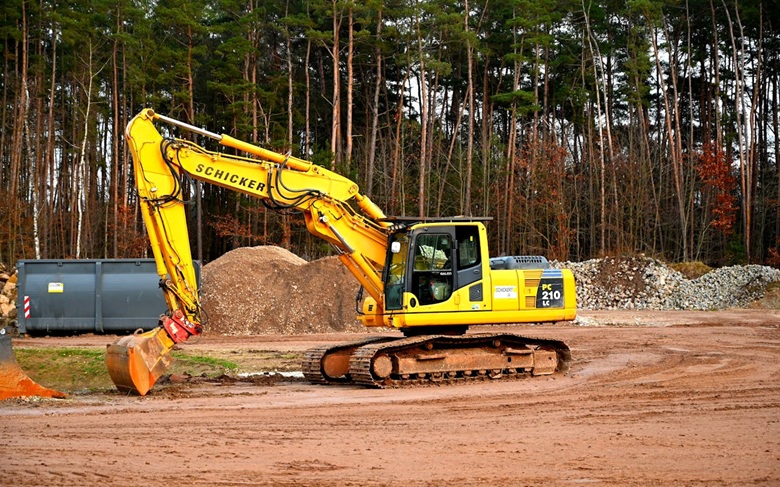
Excavators are without doubt among the most essential piece of heavy equipment there is serving industries in a wide variety of ways. Since their invention nearly a century ago, excavator design and development have been subject to countless reiterations and for the most part, this process is still on going.
Most industry leaders (manufacturers) have maintained focus on technological and mechanical innovations for the past few decades. However, more recently focus on automation has been added to the mix as the industry rapidly shifts toward unmanned and eco-friendly machinery that are aimed at solving labour shortages and naturally environmental concerns.
In Australia, these developments have been mostly prominent within the realm of mini excavators due to the popularity of compact models within the Sydney and Melbourne excavator hire segments, which over the last decade has grown exponentially.
Leading manufacturers such as Caterpillar, Komatsu, Kubota, Hitachi, Hyundai and others are currently fixated on excavators that are autonomous or tele-operable. The bulk of those linked to the research and development unit of these major manufacturers are focused on the development of 5G-enabled unmanned excavators.
Such excavators are targeted for use in high-risk disaster areas and nuclear facilities and although these excavator versions are not available for hire, they are available for sale. Prototypes, that were showcased in recent heavy equipment exhibitions such as the HEAP model (autonomous walking excavator), were seen performing numerous tasks autonomously such as trench digging and assembling walls without human assistance.
Another area that manufacturers are focused on competitively includes electrification of mini excavators coupled with hybrid Tech. Leading manufacturers are launching fully electric mini-excavators targeting the excavator for hire market as environmental regulations have resulted in lower sales especially sales in urban regions.
Electric or battery powered excavators, do not produce exhaust gases and the noise level of electric excavators compared to conventional fossil fuel powered excavators is significantly lower.
Currently, the leading manufacturers that are being seen as the ‘green’ leaders include Volvo’s hybrid technology and JCB’s electric Teletruk.
Manufacturers are also going big on precision engineering by integrating these machines with 3D systems such as like Leica MC1that enables “digital earthmoving,” which improves accuracy when tunnelling or when executing complex grading tasks.
The features mentioned above enhance the operational efficiency and productivity of excavators and new methodologies are being constantly introduced by manufacturers that are intended to maximize the output of heavy machinery, especially excavators.
These developments on productivity are generally based on cycle time analysis which revolves around data that are used to estimate “actual productivity” levels of excavators at project sites, which is critical towards assisting project managers identify and remove bottlenecks, or at least widen bottlenecks.
The cost effectiveness of these machines has also been significantly enhanced attributed to new engine designs increase productivity by 30% whilst reducing greenhouse gas emissions by an approximate 24%.
Similarly, the latest hydraulic system designs now automatically capture potential energy that is generated during operation and redirected back to the system which in reduces fuel consumption as well.
